Eventual consistency is a consistency model used in distributed computing systems. It ensures that, given enough time without new updates, all copies of data across different nodes will…
Eventual Consistency in Computer Science
Read more →
Category: Distributed Systems
#distributed systems
#reliability
#event-driven
#eventual consistency
#consistency models
#eventual
#consistency
#computer
#science

Polyglot Interop in Computer Science
Polyglot interop (polyglot interoperability) refers to the ability of different programming languages to work together within the same system or application. Instead of being confined to a single…
Read more →
Category: Distributed Systems
#distributed systems
#reliability
#event-driven
#abi
#binary compatibility
#interop
#polyglot
#interoperability
#multi-language
#computer
Two-Phase Commit (2PC) in Computer Science: A Complete Guide
Two-Phase Commit (2PC) is a distributed transaction protocol that ensures all participants in a transaction either commit or abort changes in a coordinated way. It is widely used…
Read more →
Category: Distributed Systems
#distributed systems
#reliability
#event-driven
#two-phase commit
#2pc
#distributed transactions
#two-phase
#commit
#computer
#science
Understanding Idempotent in Computer Science
In computer science, the term idempotent describes an operation that produces the same result even if it is executed multiple times. In other words, no matter how many…
Read more →
Category: Distributed Systems
#distributed systems
#reliability
#event-driven
#idempotency
#api design
#idempotent
#computer
#science
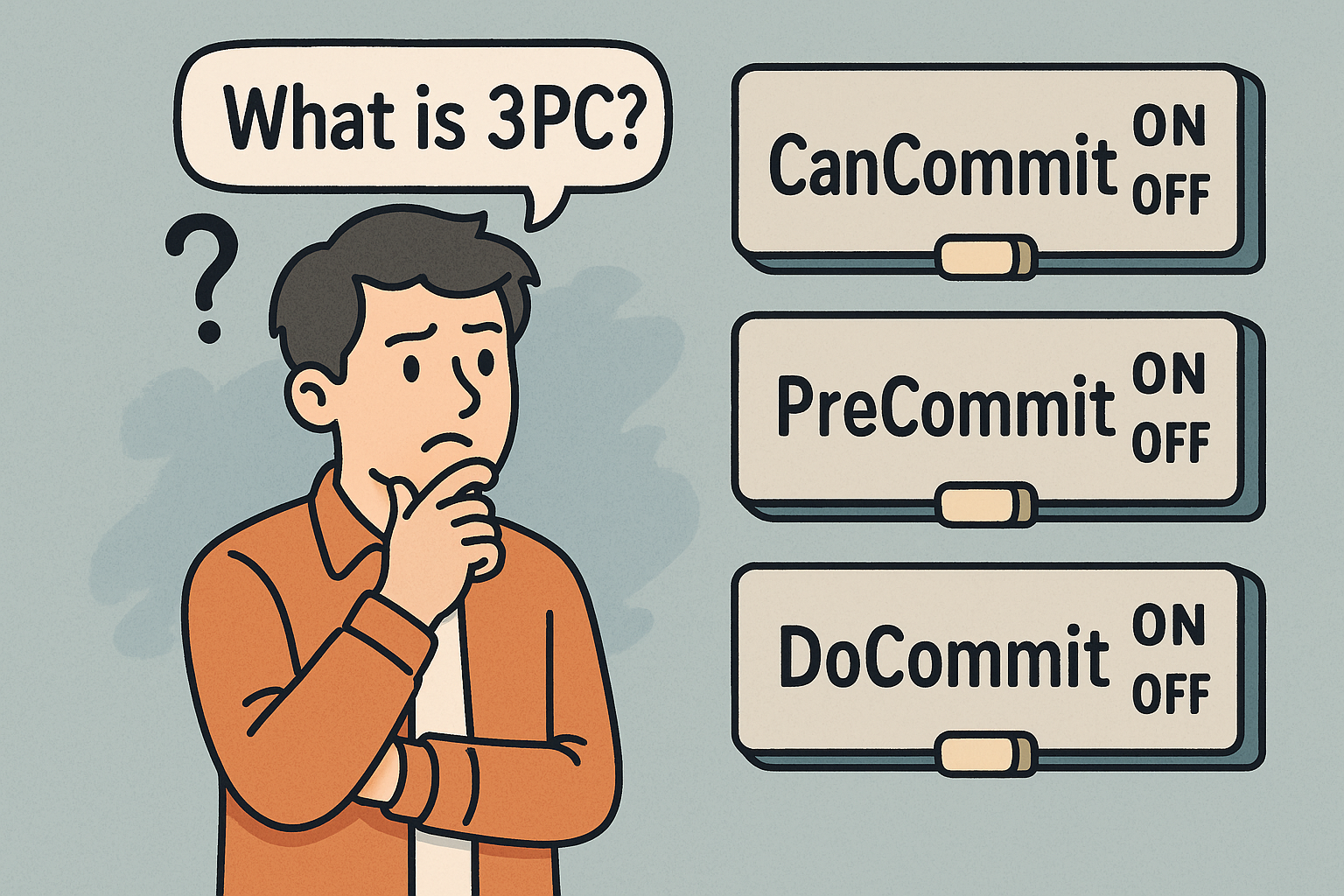
Understanding Three-Phase Commit (3PC) in Computer Science
Three-Phase Commit (3PC) is a distributed consensus protocol used to ensure that a transaction across multiple nodes in a distributed system is either committed by all participants or…
Read more →
Category: Distributed Systems
#distributed systems
#reliability
#event-driven
#three-phase commit
#3pc
#distributed transactions
#three-phase
#commit
#computer
#science